

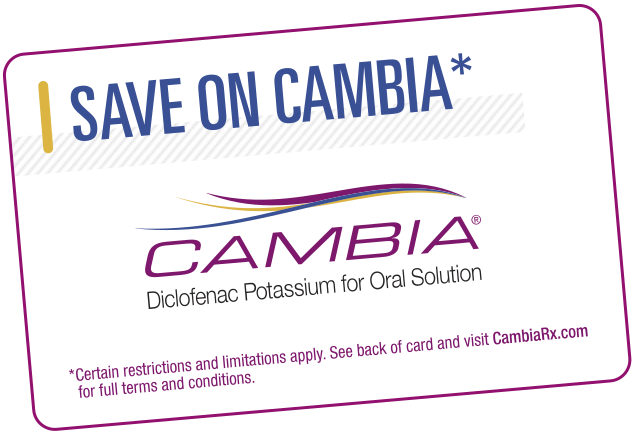
Terms and conditions apply. View savings card for full terms and conditions.
CAMBIA Savings Program SMS Mobile Terms & Conditions
CAMBIA Savings Program SMS (text) messages are sent through PSKW, LLC, a service provider partner operating on behalf of Assertio Therapeutics, Inc.
By providing your cell phone number, you represent that you are the authorized user of the wireless device you use to receive the messages and that you are authorized to approve any changes. Assertio Therapeutics, Inc. reserves the right to alter these terms and conditions or discontinue the messaging at any time and at its sole discretion, may add or delete a cellular carrier from this program at any time, without notice. Text messages you receive as part of this program are automated and your responses are not read by any person other than for quality monitoring purposes. You are not required to agree to these SMS Terms and Conditions in order to participate in the CAMBIA Savings Program and may opt out at any time. Please visit Assertio Therapeutics, Inc.’s Privacy Statement (link provided at bottom of page) or contact us for additional information. Please visit the full terms and conditions regarding participation eligibility in the CAMBIA Savings Program.
Message and data rates may apply. While we do not charge you for the messages, your mobile service provider may charge you for SMS text messages as a part of your contract or service. Please contact your mobile service provider for details.
Message frequency depends on user preferences and activity.
To stop receiving messages, reply STOP at any time.
For help, reply HELP or call 1-844-546-8634.
CAMBIA is a prescription medicine used to treat migraine attacks in adults. It does not prevent or lessen the number of migraines you have, and it is not for other types of headaches. CAMBIA contains diclofenac potassium (a non-steroidal anti-inflammatory drug or NSAID).
WARNING: RISK OF SERIOUS CARDIOVASCULAR AND GASTROINTESTINAL EVENTS
CAMBIA is a non-steroidal anti-inflammatory drug (NSAID). NSAIDs cause an increased risk of a heart attack or stroke that can lead to death. This chance is higher with longer use of NSAID medicines and in people who have heart disease. CAMBIA should never be used right before or after a heart surgery called a “coronary artery bypass graft (CABG)”.
NSAID medicines cause an increased risk of stomach and intestine problems, such as ulcers and bleeding, which can happen without warning and may cause death. This risk increases with use of steroids (corticosteroids), blood thinners (anticoagulants), smoking, alcohol use, older age, for those in poor health, advanced liver disease, and bleeding problems.
What is the most important information I should know about CAMBIA?
CAMBIA contains diclofenac (a non-steroidal anti-inflammatory drug or NSAID).
NSAIDs, including CAMBIA, can cause serious side effects, including:
Do not take NSAIDs, including CAMBIA, right before or after a heart surgery called a “coronary artery bypass graft (CABG).”
Avoid taking NSAIDs, including CAMBIA, after a recent heart attack, unless your healthcare provider tells you to. You may have an increased risk of another heart attack if you take NSAIDs after a recent heart attack.
The risk of getting an ulcer or bleeding increases with:
CAMBIA should only be used:
Who should not take CAMBIA?
Do not take CAMBIA:
Before taking CAMBIA, tell your healthcare provider about all your medical conditions, including if you:
Tell your doctor about all the medicines you take, including prescription or over-the-counter medicines, vitamins, or herbal supplements. NSAIDs, like CAMBIA, and some other medicines can interact with each other and cause serious side effects. Do not start taking any new medicine without talking to your healthcare provider first.
Especially tell your doctor if you take:
Know the medicine you take. Keep a list of your medicines and show it to your doctor and pharmacist when you get a new medicine.
What are the possible side effects of CAMBIA?
CAMBIA can cause serious side effects, including:
See “What is the most important information I should know about CAMBIA?”
Other side effects of NSAIDs include: stomach pain, constipation, diarrhea, gas, heartburn, nausea, vomiting, and dizziness.
Get emergency help right away if you get any of the following symptoms:
Stop CAMBIA and call your healthcare provider right away if you have any of the following symptoms:
If you take too much of your NSAID, call your healthcare provider or get medical help right away.
These are not all the possible side effects of NSAIDs. For more information, ask your healthcare provider or pharmacist about NSAIDs.
Call your doctor for medical advice about side effects. You may report side effects to FDA at 1-800-FDA-1088.
Please see full Prescribing Information including BOXED WARNING and Medication Guide for more information about CAMBIA.
CAMBIA is a prescription medicine used to treat migraine attacks in adults. It does not prevent or lessen the number of migraines you have, and it is not for other types of headaches. CAMBIA contains diclofenac potassium (a non-steroidal anti-inflammatory drug or NSAID).
WARNING: RISK OF SERIOUS CARDIOVASCULAR AND GASTROINTESTINAL EVENTS
CAMBIA is a non-steroidal anti-inflammatory drug (NSAID). NSAIDs cause an increased risk of a heart attack or stroke that can lead to death. This chance is higher with longer use of NSAID medicines and in people who have heart disease. CAMBIA should never be used right before or after a heart surgery called a “coronary artery bypass graft (CABG)”.
NSAID medicines cause an increased risk of stomach and intestine problems, such as ulcers and bleeding, which can happen without warning and may cause death. This risk increases with use of steroids (corticosteroids), blood thinners (anticoagulants), smoking, alcohol use, older age, for those in poor health, advanced liver disease, and bleeding problems.
What is the most important information I should know about CAMBIA?
CAMBIA contains diclofenac (a non-steroidal anti-inflammatory drug or NSAID).
NSAIDs, including CAMBIA, can cause serious side effects, including:
Do not take NSAIDs, including CAMBIA, right before or after a heart surgery called a “coronary artery bypass graft (CABG).”
Avoid taking NSAIDs, including CAMBIA, after a recent heart attack, unless your healthcare provider tells you to. You may have an increased risk of another heart attack if you take NSAIDs after a recent heart attack.
The risk of getting an ulcer or bleeding increases with:
CAMBIA should only be used:
Who should not take CAMBIA?
Do not take CAMBIA:
Before taking CAMBIA, tell your healthcare provider about all your medical conditions, including if you:
Tell your doctor about all the medicines you take, including prescription or over-the-counter medicines, vitamins, or herbal supplements. NSAIDs, like CAMBIA, and some other medicines can interact with each other and cause serious side effects. Do not start taking any new medicine without talking to your healthcare provider first.
Especially tell your doctor if you take:
Know the medicine you take. Keep a list of your medicines and show it to your doctor and pharmacist when you get a new medicine.
What are the possible side effects of CAMBIA?
CAMBIA can cause serious side effects, including:
See “What is the most important information I should know about CAMBIA?”
Other side effects of NSAIDs include: stomach pain, constipation, diarrhea, gas, heartburn, nausea, vomiting, and dizziness.
Get emergency help right away if you get any of the following symptoms:
Stop CAMBIA and call your healthcare provider right away if you have any of the following symptoms:
If you take too much of your NSAID, call your healthcare provider or get medical help right away.
These are not all the possible side effects of NSAIDs. For more information, ask your healthcare provider or pharmacist about NSAIDs.
Call your doctor for medical advice about side effects. You may report side effects to FDA at 1-800-FDA-1088.
Please see full Prescribing Information including BOXED WARNING and Medication Guide for more information about CAMBIA.

WARNING: RISK OF SERIOUS CARDIOVASCULAR AND GASTROINTESTINAL EVENTS
CAMBIA is a non-steroidal anti-inflammatory drug (NSAID). NSAIDs cause an increased risk of a heart attack or stroke that can lead to death. This chance is higher with longer use of NSAID medicines and in people who have heart disease. CAMBIA should never be used right before or after a heart surgery called a “coronary artery bypass graft (CABG)”.
NSAID medicines cause an increased risk of stomach and intestine problems, such as ulcers and bleeding, which can happen without warning and may cause death. This risk increases with use of steroids (corticosteroids), blood thinners (anticoagulants), smoking, alcohol use, older age, for those in poor health, advanced liver disease, and bleeding problems.
Please see additional Important Safety Information on this website and the full Prescribing Information.